The Sweet Science
It's always a great feeling when people come into the restaurant and love the photos on our walls. But sometimes people are also a little confused about how it all "connects." When people hear you're vegan, they conveniently put you into this neat little box. You're supposed to like certain music, dress a certain way, believe certain things and apparently decorate your restaurant a certain way. But the reality is there are way more vegans than people think, and we're just as diverse in our tastes, interests and opinions about the world as everybody else.
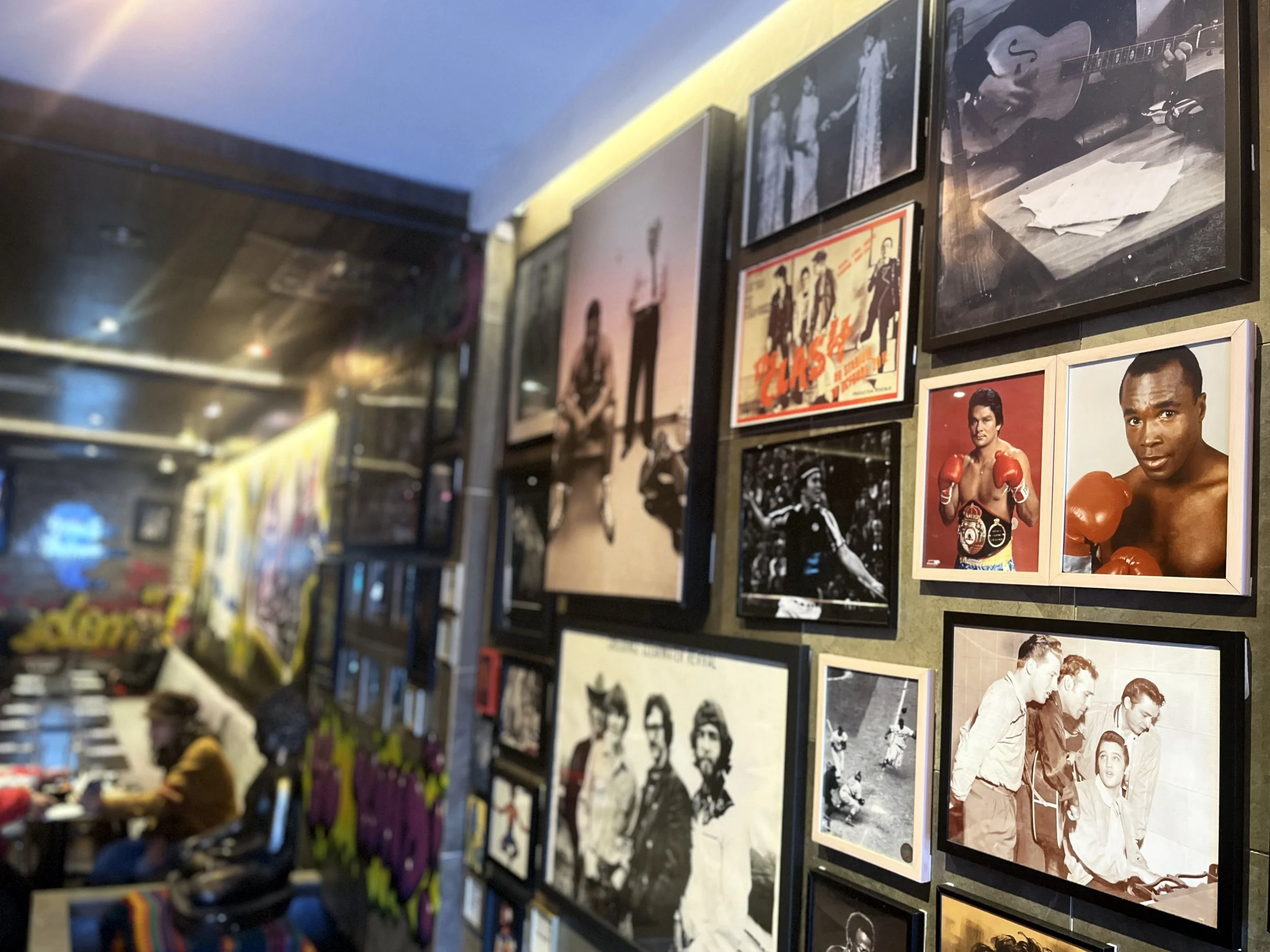
One of the things we get asked about the most is why we have so many pictures of old-school boxers on the walls. The answer is simple. And complicated. Simply put, I grew up watching these guys lay it all out in the ring during an era when, at least to me, boxing was at its best. There was something about that rough-and-tumble sport that always felt like New York City to me. Beautiful and brutal at the same time. They don't call boxing The Sweet Science for nothing.
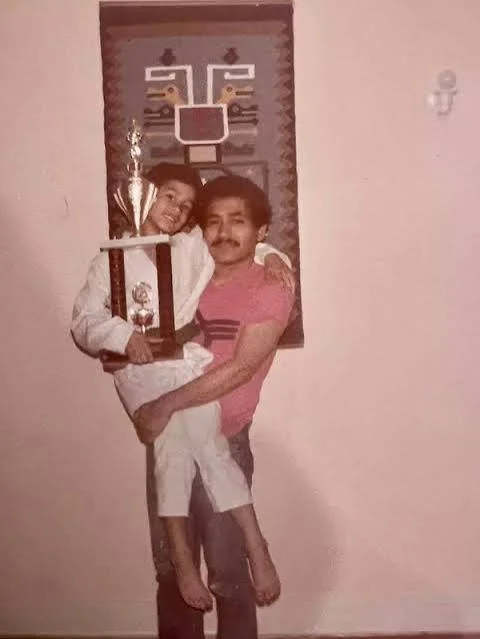
But my connection to combat sports goes deeper than just being a fan. I was lucky enough to grow up in the same household as my cousins, so we were really more like brothers. They were practitioners of the ancient art of Judo, and they weren't just good. They were better than good. They were both multi-year National Champions. So very early in my life, I got a front-row seat to what it actually takes to become great at something.
A lot of that came from their parents. My aunt was really ahead of her time. She was the first person who introduced me to things like Buddhism and thinking differently about what we put into our bodies. This was long before any of that stuff became part of mainstream wellness culture. She just believed there was a better way to live. She was also a driving force behind my cousins. She pushed them to be great. Not good. Great. She was a tireless worker herself, and when she cared about something, she gave it everything she had. There was no halfway with her. She put her time, her energy and her emotions into the things and people she believed in.
And my uncle was right there with her. He was a tough dude, and I mean that literally. Growing up, we had seen him get into his share of street fights. Now, I'm not saying that because I condone street fighting. I don't. But I do think there's an important ingredient in a person who isn't afraid to stand up for themselves when the moment calls for it. There's something inside you that says, I'm not backing down.
My cousins had some of that same energy, but they learned how to channel it differently. They put it on the mat. Judo and wrestling gave that competitive fire somewhere to go. There were rules. Technique. Discipline. Respect for your opponent. You weren't just fighting because you were angry. You were testing yourself against somebody else who had trained just as hard to test themselves against you. And I think we all need some version of that sometimes.
Competition can expose you. It shows you exactly where you are strong and exactly where you are weak. There's no hiding from it. Especially in an individual sport like wrestling or Judo. When you step onto that mat, it's you. Nobody is coming in to save you. You prepared or you didn't. You put in the work or you didn't.
But what I remember most about my uncle as I get older isn't the street fights. It's how present he was with his kids. He wasn't sitting in the stands telling them to work harder while he slept in. If they were getting up at 6:00 in the morning to run hills, he was getting up at 6:00 in the morning to run hills with them. Every competition, he was there. Every practice, every sacrifice, every victory and every loss, he was right beside them, pushing them to be the best they could possibly be.
When my cousins reached high school age, they switched from Judo to wrestling. Years later, they would sometimes second-guess that decision because some of the kids they regularly beat in Judo went on to represent the United States in the Olympics. But personally, I think wrestling was the natural next step for two people who constantly needed to push and test themselves. Wrestling is brutal. There's nowhere to hide. No teammate to blame. It's you and another person in the middle of that mat, and one of you is going to impose your will on the other.
They both went on to break records, and my cousin Frank became the first four-time Private School State Champion in New York. That didn't surprise anybody who knew him. One time our older cousin Pablo bet Frank twenty dollars that he couldn't do 1,000 sit-ups straight. Twenty dollars was serious money for a 12-year-old back then. Frank did 1,100.
That's the kind of shit I grew up watching.
Looking back, I realize I learned almost as much from watching my aunt and uncle as I did from watching my cousins compete. My aunt taught me about health, spirituality and putting everything you have into something you believe in. My uncle taught me about presence. And my cousins showed me what could happen when you combined all of that with discipline.
Great things require your undivided attention.
You can't push somebody toward greatness from across the room. You have to be there. My uncle didn't tell his sons to go run the hill. He ran the hill with them. There's a difference. And restaurants are very much the same way.
For a restaurant to become great, somebody has to be paying attention. Really paying attention. Not just to the big things, but to everything. How the food tastes. How somebody is greeted when they walk through the door. Whether the bathroom is clean. Whether the music is right. Whether a server is struggling. Whether food is being wasted. Whether the numbers make sense. Whether the lights are too bright. Whether the person sitting at table twelve has been waiting too long for their drink. It's a thousand little things demanding your attention at the same time.
For years, I interpreted that lesson one way: BE THERE. So I was. Seventy hours a week sometimes. Solve every problem. Put out every fire. Work harder. Sleep less. Worry more. Pray.
Brute strength.
And for a while, brute strength can get you pretty far. I know because it got me through about eight years in the restaurant business. If something wasn't working, my answer was almost always the same: work harder.
But eventually I started understanding something my cousins had probably learned a long time before I did.
You can't become a champion on toughness alone.
Like elite boxing, running a great restaurant isn't about coming out swinging every day. Raw aggression will only get you so far. You need strategy. Discipline. Timing. You need to know when to push and when to pull back. You need to study what's happening around you and make adjustments, sometimes right in the middle of the fight.
That's when I finally started learning the science of the restaurant business.
The science is the numbers. Food cost. Labor. Inventory. Scheduling. Purchasing. Pricing. Waste. Knowing what something actually costs you before deciding what to charge for it. Understanding that being busy and making money are two completely different things. But the science is also in the minute techniques of the business. How many people you schedule on a Tuesday compared to a Saturday. How much prep you actually need. Where somebody stands during service. How quickly a table gets greeted. How long a drink takes to hit the table. A thousand tiny decisions that individually don't seem like much but together can be the difference between winning and getting knocked out.
For years I thought working harder was the answer to almost everything. But eventually you realize that working 70 hours a week isn't necessarily discipline. Sometimes it's just compensating for the things you haven't learned yet.
Once I really started learning the numbers and paying attention to the minute techniques of the business, something strange happened. We started managing the restaurant with a little more grace. A little less panic. A little less stress.
And that's when I started understanding the sweet part of The Sweet Science.
Watch a truly great fighter and sometimes it doesn't even look violent. There's a fluidity to it. A grace. The footwork, the timing, the movement, the ability to land a punch while somehow not being there when the punch comes back. At the highest level, all those brutal hours of training eventually become something that looks almost effortless.
That's mastery.
A great restaurant can feel the same way. The host opens the door at the right moment. The bartender already sees the empty glass. The server knows when you need something and, maybe more importantly, when you want to be left alone. The kitchen is moving. The music feels right. The lights feel right. Plates are coming out. Drinks are going in. Fifty different things are happening at once, but when it's working properly, the guest shouldn't feel any of that chaos.
They should just feel the night.
That's the sweet part.
There's one more thing boxing has taught me. At the highest level, the real fight isn't always against the person standing across from you. A lot of the time, you're fighting yourself. Everybody can punch. Everybody trained. Everybody wants to win. The difference can be who stays disciplined enough not to make the mistake that gets them knocked out.
The restaurant business feels exactly the same to me. I've spent plenty of time worrying about the restaurant down the street, the new place that just opened, what's trending, who's getting press, who's busier than us and who's doing better on social media. But after all these years, I've realized they're not really who we're fighting.
We're fighting ourselves.
Can we make the food a little better today than it was yesterday? Can we give better service? Can we control our costs? Can we keep the restaurant clean? Can we create something people actually care about? Can we stay disciplined when we're tired, frustrated, broke or scared? Can we recognize our mistakes before one of them knocks us out?
Because just like in boxing, sometimes it's not the biggest punch that beats you. Sometimes it's dropping your hands for half a second.
That's the scary part about this business. You can do a hundred things right and still get hurt badly by the one thing you stopped paying attention to. So I don't spend much time thinking about becoming the "best vegan restaurant." I don't even know what that means. Food is subjective. Restaurants are subjective. Art is subjective. Chasing a title like that feels like nonsense to me.
I'm much more interested in becoming a better version of our restaurant.
That's the opponent. Yesterday's UVK.
I would NEVER judge anyone for choosing a more conventional life. Never. Honestly, it sounds pretty damn good sometimes. I fantasize about it more than people probably realize. A normal schedule. Vacations. Weekends. Knowing exactly what next month is going to look like. There's absolutely nothing wrong with that life.
I just can't seem to live it.
Maybe I learned the work ethic early. It just took me another thirty years to learn the technique.
When I was younger, I thought toughness meant being able to take more punches. Now I'm starting to understand that maybe the goal is to learn how not to get hit so damn much. Work smarter. Understand the numbers. Build systems. Learn from your mistakes. Keep your hands up. Move your feet. Don't panic when you get backed into a corner.
That's the science.
And when you can do all of that while making the person sitting in your restaurant feel like none of it is difficult?
That's the sweet.
Maybe that's why those fighters belong on our walls. They remind me that there is no permanent victory. You win the match. You win the tournament. You become champion. You celebrate.
Then tomorrow comes. And you have to decide whether you're willing to do it all again.There's always another round. And like my man Rocky Balboa said, sometimes you just need the chance to prove to the world:
"I'm not a bum."
Peace,
David